



SA's offshore oil hunt to grow
SOUTH Australia's petroleum exploration potential appears to be hotting up with four large offshore blocks released for competitive bids. Interestingly three of the blocks surround the area where BP is currently conducting seismic exploration for oil and gas in the Great Australian Bight.
The head of resources at the federal Department of Resources, Energy and Tourism, Tania Constable, could not confirm whether BP requested the areas be opened up, but said "a company or companies" made the request that the areas be considered in the current round of offshore licence releases.
Nationally, 27 blocks were released across nine basins. Ms Constable emphasised there was strong interest in finding more gas to feed into the country's burgeoning liquefied natural gas (LNG) industry. In SA the three Australian Bight blocks cover 49,527sq km across water depths ranging from 200m to 4500m. As well as BP, Bight Petroleum is also active in the region.
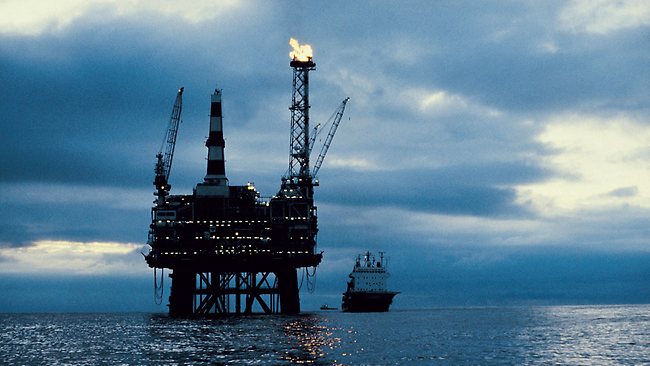
The Federal Government conducts two acreage releases a year, with the major release coinciding with the annual Australia Petroleum Production and Exploration Association (APPEA) conference, which is being held in Adelaide this week.
Ms Constable said the agency was guided by the desires of the industry, which puts in requests for areas it thinks may be prospective. This year one block was also released on the advice of Federal Government body Geoscience Australia, which identified an area with potential for oil and gas.
"Of the 27 blocks we have released, largely they've come from industry requirements," Ms Constable said.
Following the release, Geoscience Australia provides a prospectus of pre-competitive information to potential bidders, to allow them to decide whether they will bid for an area.
Companies have until November 8 to analyse the new blocks and decide whether they will submit a bid.
The bids involve plans for a six-year work program, with the first three years typically exploration such as seismic testing, followed by plans to follow up with well drilling if the early exploration looks promising.
The licences are granted for six years to accommodate the long time frames needed for this sort of work.
"These are prospective areas, some more highly prospective," Ms Constable said.
"If you look at the northern Carnarvon (Basin) area (off the Western Australian coast), for example, (it has) very well known resources.
"Most of this acreage is bordering other blocks that are already being explored or that are under development."
Ms Constable said technical advances, such as the ability to drill in deep water and the development of floating LNG plants, meant that the potential for resource exploitation in Australia's waters was increasing.
"The technology has gotten so good over the years that we're now at a point where it is much more commercial for these companies to want to explore in these deeper frontier areas, so that's quite exciting for us," she said.
Last week Mr Ferguson announced the winning bids from the 2011 release of blocks.
Twelve permits were awarded to eight companies, including BHP Billiton, Bass Strait Oil Company, WHL Energy and Woodside.
Bidders pledged to invest $303 million in exploration.
WHL Energy won ahead of six other bidders for a block in the Otway Basin off south-west Victoria. Most other blocks were off north-west WA.
Mr Ferguson said the new permits would continue the growth of investment and employment in the resources sector.
"LNG exports are forecast to significantly expand in Australia over the next two decades," he said.
"We already export $11 billion of LNG, making Australia the third largest LNG exporter in the Asia-Pacific region and the fourth largest LNG exporter in the world."
BP has been conducting seismic exploration in the Bight Basin since November and is licensed to continue that exploration until the end of the month.
BP is understood to be keen to use all of the time available before analysing the data ahead of a decision to drill.
BP is expected to spend about $1.43 billion exploring, with the Norwegian vessel Ramform Sterling conducting seismic testing across the 12,500sq/km area the company currently holds.
Late last year Phil Home, managing director of BP Developments Australia, described the work program as "one of the biggest areas of seismic surveys ever conducted in Australia".
The seismic program was expected to cost $US600 million, with BP also committed to drilling four exploration wells starting in 2013 should the first stage of exploration go well.
Adelaide's Bight Petroleum is also exploring in the area. It describes the Basin as "one of the most prospective under-explored frontier basins in the world".
"Only nine exploration wells have been drilled in the Bight Basin," the company says on its website.
"Of these, only two have penetrated the primary target area now identified by BP and Bight Petroleum, and none of these were drilled on structure.
"One of these wells, Greenly-1, drilled by BHP in 1993, contained over 1800m of good oil and gas shows."
Bight has two permits covering 8500sq/km in the eastern Bight Basin.
"Bight Petroleum has committed to a work program with guaranteed expenditures that include the acquisition of 935km of 3D seismic ... in year one followed by the drilling of one well ... in year three. Year one ... commences on July 6, 2012."
Source: adelaidenow.com.au