



 totally enclosed lifeboat, solas
  Jual LIFERAFT SEA-AIR Type AOR 65
  100 person liferaft type throw-ov
  Types of life rafts, Liferaft
Cape Wind Deadline: Headwinds for Offshore Turbines
The drive for clean energy collides with concern over cost and clear views of the horizon.
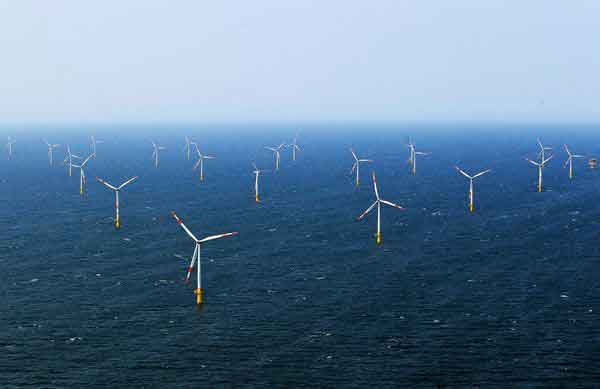
Germany's offshore wind capacity has expanded rapidly since the 2011 opening of its first commercial offshore wind farm, utility EnBW's Baltic 1 in the Baltic Sea, seen here. But newly reelected Chancellor Angela Merkel and her governing coalition indicate they will take steps to slow renewable energy due to cost concerns.
Photograph by Joern Pollex, Getty
By now, 130 turbines were supposed to be turning above the shallow area of Nantucket Sound known as Horseshoe Shoal. But nothing is there to capture the power of December’s winds, except perhaps for the wings of the long-tailed ducks that winter around Cape Cod.
In the dozen years since Cape Wind was first proposed, there have been reams of study over potential impact on waterfowl, marine mammals, and submerged Indian burial grounds. The developers received local, state, and federal approvals, were granted the first U.S. offshore wind energy license in 2010, and gained the support of some key environmental groups. (See related quiz: "What You Don't Know About Wind Energy.")
But the true test will be the final hurdle: money.
To qualify for a U.S. investment tax credit that would cover 30 percent of its estimated $2.6 billion in construction costs, Cape Wind developers must break ground by December 31, or prove that they’ve made a substantial start on the project. And an important backer, the Danish pension fund PensionDanmark, has pledged $200 million contingent on a year-end deadline for lining up additional investors.
Cape Wind spokesperson Mark Rodgers said the developers would have no comment on the looming deadline. But he maintained that the project is fully permitted, has approved construction and operations, and expects to soon secure more investors. “We're very confident that we're going to be America's first offshore wind farm,” he said.(See related: First U.S. Offshore Wind Power Project Approved.")
But to do so, Cape Wind will need to overcome some stiff economic headwinds that are affecting offshore wind projects around the world. In two of the countries that have been driving global growth of offshore wind in recent years, the United Kingdom and Germany, government officials have faced criticism over the policies’ contribution to high electricity costs. (See related story, “Frozen Fish Help Reel in Germany’s Wind Power.”)
And offshore wind has attracted an especially well-heeled and determined group of opponents, who argue that the high-cost power produced by offshore turbines isn't worth the price of altering timeless ocean vistas—particularly in their own backyards. In Scotland, for instance, real estate developer Donald Trump is fighting a wind farm project planned for Aberdeen Bay, where he has invested heavily in a coastal golf resort.(See related pictures: "Flying Wind Turbines Reach for High-Altitude Power.")
On this side of the Atlantic, Cape Wind’s most vocal opponents included the late Massachusetts Senator Edward M. Kennedy and his nephew, environmental lawyer Robert F. Kennedy Jr. From the opposite side of the political spectrum, billionaire businessman and Cape Cod denizen and yachtsman William Koch continues the battle, telling CommonWealth magazine earlier this year that he had put “well over” $1 million into fighting Cape Wind as one of the backers of the Alliance to Protect Nantucket Sound. His aim, he said, has been to “delay, delay, delay.”
And now, for Cape Wind, the clock is ticking.
Europe’s Offshore Boom
On paper, these look like boom times for offshore wind energy. During the past five years, global offshore wind output grew at a surging annual pace of 40 percent, thanks largely to new farms off the coasts of the United Kingdom and Germany. Improved technologies are coming online as well. Turbines are becoming bigger and more powerful. Japan debuted an experimental floating farm last month that could be a key to harvesting the bountiful wind in deepwater locations that couldn’t be reached with turbines moored to the seabed.
In Europe, 58 working offshore wind farms in ten countries have a capacity of about 6,000 megawatts of power, according to the European Wind Energy Association (EWEA). (That’s about the capacity of the largest power plant in the United States, the Grand Coulee Dam.) By 2020, EWEA estimates, offshore installations will account for nearly one-fifth of the wind power in Europe, and will meet 4.2 percent of the EU’s electricity demand.
Because offshore turbines are considerably higher in capacity than onshore installations, governments have promoted them as crucial in the EU’s drive to achieve 20 percent renewable electricity by 2020. (See related story: "Sizing Up Wind Energy: Bigger Means Greener, Study Says.") But EWEA recently warned that “warning signs were evident” that cost concerns might stall offshore wind projects in Europe without a firm commitment to that goal.(See related: "Global Renewable Energy On Track to Eclipse Natural Gas, Nuclear.")
In the United Kingdom, world leader in offshore wind with more than half of Europe’s installed capacity, the government recently decided to boost subsidies for offshore wind, but it faced critics who complained the projects needed to be subsidized at three times the market price of power.
One of the most vocal is Trump, who is currently launching legal action against Scotland's government over its approval of the planned 11-turbine European Offshore Wind Deployment Centre in Aberdeen Bay. He’s taken on the first minister of the Scottish parliament on Twitter.
source : news.nationalgeographic.com